

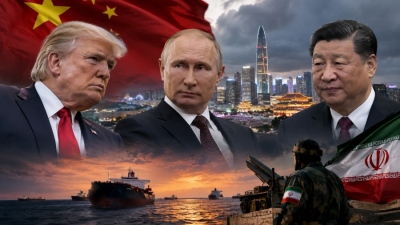
Determining for the conclusion or the dramatic evolution of the war in Iran are estimated to be the Asia-Pacific Economic Cooperation (APEC) Summit, scheduled for November 18 and 19 in the city of Shenzhen. In statements, US President Donald Trump indicated that he intends to meet with his counterparts from Russia, Vladimir Putin, and China, Xi Jinping—although this has not yet been officially confirmed—in order, among other things, to bring an end to the Iran war. Trump even asserted that he will not escalate military action against Iran provided progress is made in the talks, although US Secretary of State Marco Rubio kept expectations low, pointing out that "I wouldn't say we are on the verge of a major breakthrough" and citing outrageous demands from Tehran. For its part, Iran maintains that it is ready to open the Strait of Hormuz within 2 days if the Americans accept the 7 conditions they have set, pointing out that Americans are sick and tired of being dragged into a war for Israel. Furthermore, analysts estimate it is very likely that Benjamin Netanyahu will push for a new attack against Iran to, among other things, derail the plan of his political opponent, Gadi Eisenkot, to form a governing coalition in Israel. Under these extremely fluid geopolitical conditions, it becomes clear that the next 10 days will be exceptionally critical for the evolution and outcome of the Middle East war.
All eyes on China
Next week could prove decisive for the course of the war in Iran, with diplomatic focus shifting to China, where Donald Trump is estimated to meet with Xi Jinping and Vladimir Putin. The Asia-Pacific Economic Cooperation (APEC) summit taking place on November 18 and 19 in Shenzhen offers an opportunity for discussions among the three leaders, with the US president having already included ending the war in Iran among the topics he wishes to examine. "One of the meetings, I believe, will be with President Putin and President Xi. And that will be interesting," Trump told reporters in West Palm Beach, Florida. As he explained, discussions will encompass denuclearization alongside a broader spectrum of issues. "We are trying to end the war in Iran and we are doing well," he asserted, while linking the prospect of peace to the economic and military pressure exerted on Tehran. In this exact framework, Trump referenced the American "Iron Gate" operation, which he stated is already underway and aims to cut off Iran's overland supply routes.
CNN: Secret behind-the-scenes negotiations
According to CNN, the American president's recent statements that if Tehran makes progress toward reaching an agreement on its nuclear program and the reopening of the Strait of Hormuz, the possibility of new American military strikes will be "very small". As highlighted, these statements indicate an effort to provide more space to the diplomatic process rather than maintaining military pressure. In statements to CBS, Trump characterized new American strikes against Iran as "extremely unlikely," provided Tehran makes progress toward a nuclear agreement and the reopening of the Strait of Hormuz. As he said, he "does not seek" to escalate the war. However, the shift in his rhetorical tone does not signify abandoning the military option. Trump continues to view pressure as an essential tool for securing concessions from the Iranian leadership. This dual message of negotiation and threat shapes the framework within which potential contacts in China will take place.
The midterm elections
A decisive role in this new momentum appears to have been played by the November 3 midterm elections and the severe ballot box losses suffered by the Republicans. It is characteristic that US Vice President JD Vance acknowledged that the war constituted one of the factors contributing to the party's electoral defeat. Trump did not dispute his assessment, admitting that voters "did not like the war". He nevertheless defended the initial decision to attack Iran, stating he would repeat it without hesitation. Trump's decision was defended by Secretary of State Marco Rubio. In any case, electoral pressure creates a new political reality for the White House. Trump is called upon to seek a way out of the conflict without appearing to exit having failed to secure substantive concessions.
Araghchi's message
Tehran, for its part, is attempting to convert American political developments into a negotiating advantage. "American voters made their choice. It is time for the White House to make its own," stated Iranian Foreign Minister Abbas Araghchi. He leveled harsh criticism against Israel, arguing that Americans have grown tired of their country's involvement in protracted military conflicts. According to Araghchi, Israel is dragging American governments into "endless wars," while discontent has spread across both American society and the broader region. The Iranian leadership thus appears determined not to accept an agreement that could be construed as yielding under American pressure.
Qatar and the talks
Behind public disputes, a discreet negotiation process is unfolding between Washington and Tehran. Qatar has assumed a central mediating role, circulating a framework document in which both sides propose amendments. Contacts have continued for weeks, possibly months, but intensified following the American midterms. Trump is also expected to meet with the Prime Minister of Qatar, Sheikh Mohammed bin Abdulrahman al Thani, in Washington today, Monday, November 9. Despite diplomatic activity, US Secretary of State Marco Rubio is attempting to temper expectations. "I wouldn't say we are on the verge of a major breakthrough," he stated, describing Iranian demands as unrealistic.
The nuclear program at the center of the bargain
One of the largest obstacles remains Iran's nuclear program. Washington seeks to ensure Tehran lacks the capability to construct a nuclear weapon, whereas the Iranian side treats this specific issue as a matter of national sovereignty. Of particular significance are hundreds of kilograms of enriched uranium remaining hidden at an unknown location within Iran. According to reports, the US is examining either lowering the uranium enrichment grade or transferring it to a third country for safe storage. Tehran maintains its nuclear program serves exclusively energy purposes. Nevertheless, the enriched uranium stockpile constitutes a major negotiating tool that the Iranian leadership appears unwilling to abandon without substantive quid pro quos.
Strait of Hormuz forms the second major hurdle
Equally critical is the issue of the Strait of Hormuz. Iran aims to retain a decisive role in managing navigation, while the United States demands free and open maritime routes. Tehran has defined, in cooperation with Oman, a new maritime route and demands its official recognition alongside the closure of remaining routes. For Washington, such a concession would equate to accepting a major boost in Iranian influence across the region. The divergent objectives of the two sides render the Strait one of the most difficult negotiation items.
The two-day proposal for reopening the Strait
The Iranian side has presented a concrete proposal for reopening the Strait of Hormuz. As Araghchi explained to Al Jazeera, the plan was drafted in cooperation with Qatari mediators and builds upon an earlier seven-day proposal presented in September at the UN General Assembly. According to the Iranian minister, on the first day the United States must implement specific measures, and on the second day Tehran will permit the reopening of the Strait. The demands—constituting the renowned 7 conditions—include lifting American sanctions, reducing the US military presence in the region, reinstating exemptions for Iranian oil exports, and unfreezing blocked funds. Iran also demands terminating the war on all fronts, including Israeli strikes in Lebanon.
Sanctions and frozen funds on the table
Beyond security issues, Tehran's economic demands form a core part of the negotiations. American sanctions have restricted possibilities for selling Iranian oil on international markets, while billions of dollars in assets remain frozen in foreign banks. Washington is reportedly examining the relaxation of certain restrictions to create conditions for an agreement. For Iran, economic relief acquires particular significance due to severe pressures facing the population and record inflation. Tehran additionally demands compensation for the assassination of Supreme Leader Ali Khamenei and top military commanders at the onset of the war in February.
Operation Iron Gate and American military pressure
Alongside diplomatic contacts, the US is reinforcing measures to blockade Iran. The new "Iron Gate" operation, constituted by the US Central Command (CENTCOM), aims to expand the naval blockade toward land borders and the Caspian Sea. The special 20-person force is tasked with blocking the transfer of advanced weapon systems, dual-use technologies, sanctioned materials, and illicit revenues. Trump asserted the operation is already underway and that nothing now enters Iran by land or sea. The Islamic Revolutionary Guard Corps dismissed the statements, characterizing the new blockade as a "verbal trick". Iran possesses land borders spanning roughly 5,900 kilometers with seven countries, highlighting the vast scope of the American operation.
Attacks continue despite talks
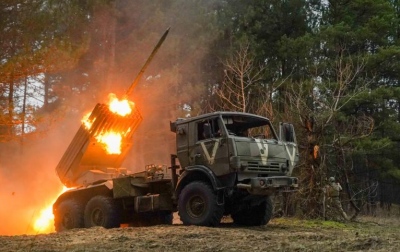
The fragile situation is reflected in the latest military incidents. Iranian state media reported that American forces struck Qeshm Island, causing at least four explosions. Hormozgan province deputy governor Ahmad Nafisi stated no damage was sustained by critical infrastructure and the situation remains under control. Concurrently, the Revolutionary Guards maintained they completely halted oil transport via the southern route of the Strait of Hormuz, utilized by ships under American naval escort. Iranian attacks against vessels violating restrictions had already reached record levels in October. These episodes demonstrate how easily a fresh military clash could undermine the negotiation process.
The Netanyahu factor
Additional uncertainty is generated by political developments in Israel and assessments regarding a potential new military initiative by Benjamin Netanyahu. According to analyses by Iranian media, Gadi Eisenkot possesses a 28-day deadline to form a 61-seat governing coalition. As noted, one concern voiced regarding Israel is that Netanyahu, fearing the unification of his political opponents, might launch a war against Iran or Lebanon to delay the formation of the opposition alliance. As stated, Netanyahu may seek a new military conflict with Iran or Lebanon to alter political balances and hinder forming a new government. If Benjamin Netanyahu unleashes an attack and starts a new war against Iran, he could disrupt Eisenkot's governing coalition formation process in two ways, thereby extending his stay in power. The first way is the so-called "positive political strategy," via forming an emergency or national unity government. The second is the "negative political strategy," by creating obstacles in the process of forming Eisenkot's coalition government.
Tehran's fear of a new attack
A fundamental problem in negotiations remains the near-total lack of trust between Iran and the United States. Tehran points out that the war began while talks over the nuclear program were already underway. It consequently fears that ceding control of enriched uranium and opening the Strait of Hormuz will forfeit major negotiating advantages without guarantees against a new attack. Added to the equation are Iran's allies in Lebanon, Iraq, and Yemen, alongside the activity of the Houthis in the Red Sea. Tehran seeks to ensure any potential agreement is not restricted to its own territory but covers remaining fronts as well.
The China Summit
Within this environment, the prospect of meetings between Trump, Xi Jinping, and Vladimir Putin in China acquires major weight. Secret contacts with Iran, Qatari mediation, and the American president's intent to raise the issue with Chinese and Russian leaders shape parallel diplomatic processes. Nevertheless, disagreements remain deep. The nuclear program, control of the Strait of Hormuz, economic sanctions, and demands to terminate conflicts across all fronts continue to obstruct a comprehensive agreement. Trump states he desires no new escalation while retaining the military option. Iran seeks substantive quid pro quos without abandoning core demands. Thus, focus shifts to Shenzhen, where a political exit from the war may be sought at the highest level. There it will become apparent whether a diplomatic solution can genuinely be found to end the war or if deadlock will lead to hell raining down, as warned by Iranian FM Abbas Araghchi.
www.bankingnews.gr








Σχόλια αναγνωστών